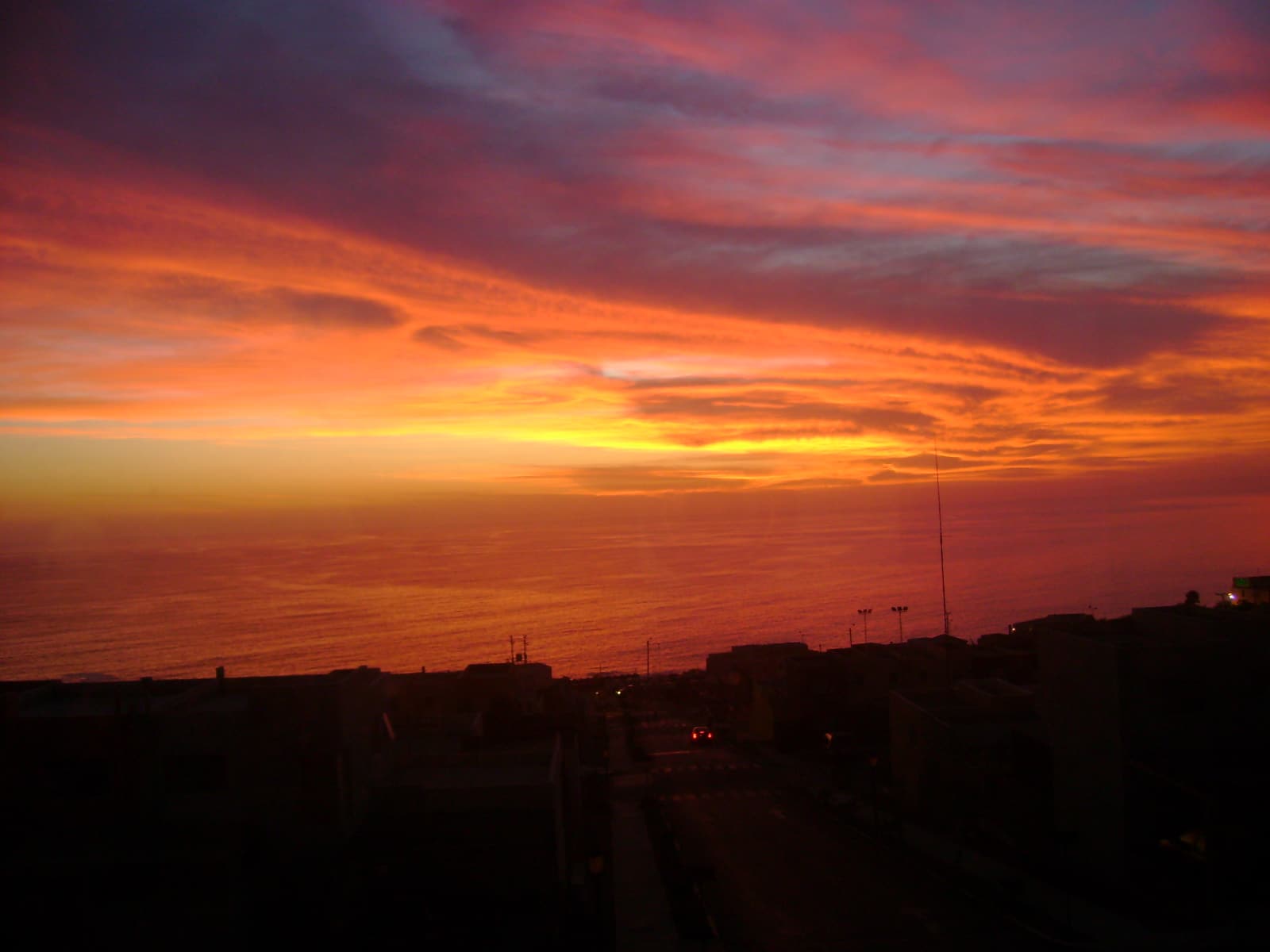
Iquique has a mild desert climate moderated by the cold Humboldt Current. It almost never rains, it is never very hot and never truly cold. The choice of when to come is really about how much sun you want on the beach, how busy you like it, and whether you are heading up to the altiplano.
The seasons at a glance
Temperatures are approximate long-term averages and vary from year to year.
| Season | Months | Typical daytime high | What to expect |
|---|---|---|---|
| Summer | December – March | About 25–27 °C | Sunniest and warmest; sea at its most inviting; Chilean holidays, busiest and priciest. Summer storms in the altiplano. |
| Autumn | April – May | About 21–24 °C | Still warm, fewer people, good value. Navy Day events on 21 May. |
| Winter | June – August | About 17–19 °C | Mild, with frequent grey mornings; quiet beaches; La Tirana festival in mid-July; clear, cold altiplano. |
| Spring | September – November | About 19–22 °C | Brightening skies, comfortable temperatures, low season prices. Excellent for flying and day trips. |
Summer: December to March
This is beach season. Days are reliably sunny, nights are warm, and the sea — never tropical on this coast — reaches its most comfortable temperatures. January and February are the Chilean school holidays, so Cavancha is packed, hotel prices peak and you should book ahead. It is also the season of the invierno altiplánico, when afternoon thunderstorms hit the high Andes: the coast stays dry, but roads to the Salar del Huasco and Isluga can be cut.
Autumn: April and May
One of the best times to visit. The crowds go home, the weather stays warm and the water is still pleasant. On 21 May, Navy Day, Iquique commemorates the battle of 1879 with ceremonies and parades on the waterfront; the city is busy that week.
Winter: June to August
Winter here means a jumper in the evening rather than a coat. What you will notice is the camanchaca: low coastal cloud and fog that rolls in off the cold ocean, often covering the city in the morning and lifting — or not — by the afternoon. Go up to the pampa and you are usually back in brilliant sunshine within half an hour. The great event is the Fiesta de La Tirana, peaking on 16 July; hotels across the region fill up. Winter is also the dry, clear season in the altiplano, though nights there are bitterly cold.
Spring: September to November
The cloud thins, the days lengthen and prices are low. Around Chile’s national holidays on 18–19 September there is a short domestic rush. This is a fine time for combining the city with Humberstone, Pica and the geoglyphs.
When to come for…
- The beach: December to March, with January and February the warmest and busiest.
- Paragliding: possible on most days of the year, which is exactly why pilots love it. Operators choose the time of day for the best conditions.
- Surfing and bodyboarding: waves break all year; swells are generally bigger and more consistent in the southern winter, when a thicker wetsuit helps.
- Humberstone, Pica and the geoglyphs: any time. The pampa is sunny year-round; it is hottest at midday in summer and cold at night in winter.
- The altiplano: roughly April to November for dry roads and clear skies. Avoid the stormiest weeks of January to March unless you have local advice.
- Festivals: mid-July for La Tirana; 21 May for Navy Day.