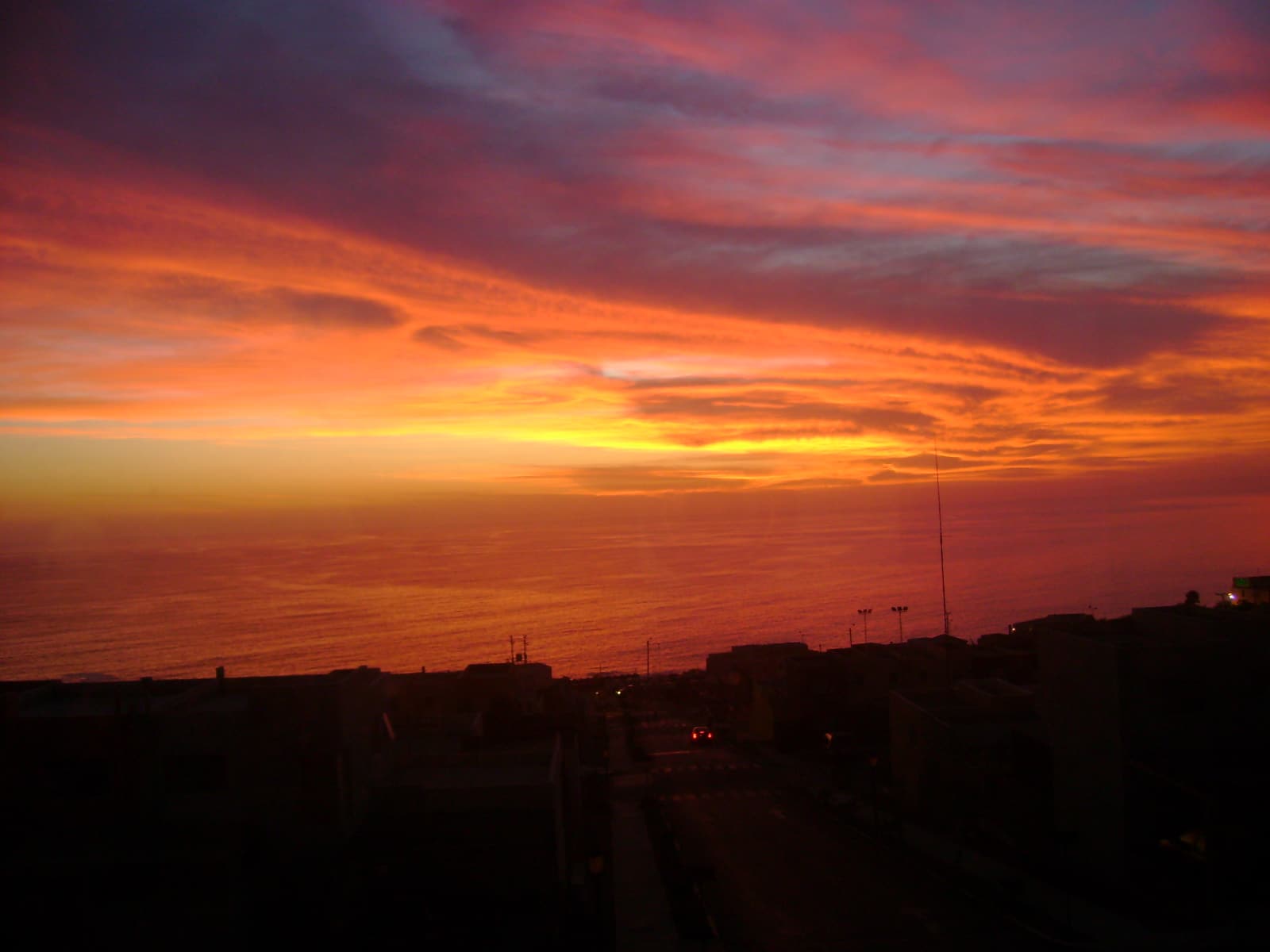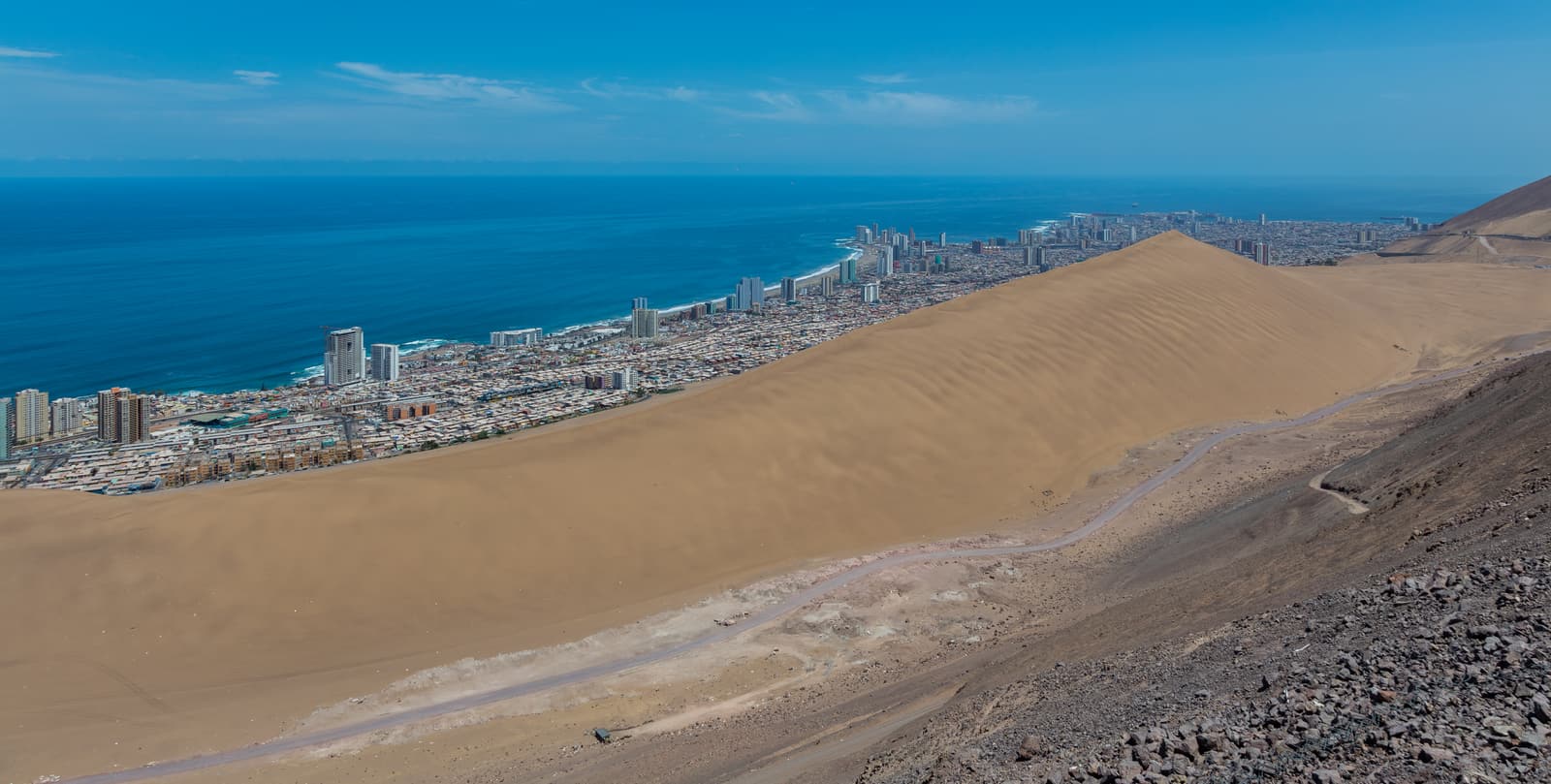
Iquique is the capital of the Tarapacá region, a city of roughly 200,000 people on a narrow coastal terrace in the far north of Chile. It is a port, a duty-free shopping hub, a mining service town and — increasingly — a beach and adventure destination, with a climate that barely knows rain.
A short history
People have fished this coast for thousands of years; the Chinchorro culture, which made the world’s oldest artificial mummies, lived along it. In colonial times Iquique was a small port of Peru, serving the silver mine of Huantajaya in the hills above.
Everything changed in the 19th century with saltpetre. The desert behind the city held the world’s only large deposits of natural sodium nitrate, and demand for fertiliser and explosives made it immensely valuable. Control of that wealth was a cause of the War of the Pacific (1879–1884) between Chile and the alliance of Peru and Bolivia. The naval Battle of Iquique on 21 May 1879 gave Chile its greatest hero, Arturo Prat, and by the end of the war Tarapacá was Chilean.
The boom that followed built the theatre, the clock tower and the mansions of Baquedano. It also had a dark side: in December 1907 soldiers fired on striking nitrate workers and their families who had gathered at the Santa María school, one of the worst massacres in Chilean labour history. After synthetic nitrate was developed in Germany, the industry declined, and by 1960 most of the works had closed. Iquique reinvented itself through fishing, and from 1975 through the ZOFRI free-trade zone; copper mining in the Andes now drives the economy.
The places to see
Each of these has its own detailed guide:
 Iquique city & coast
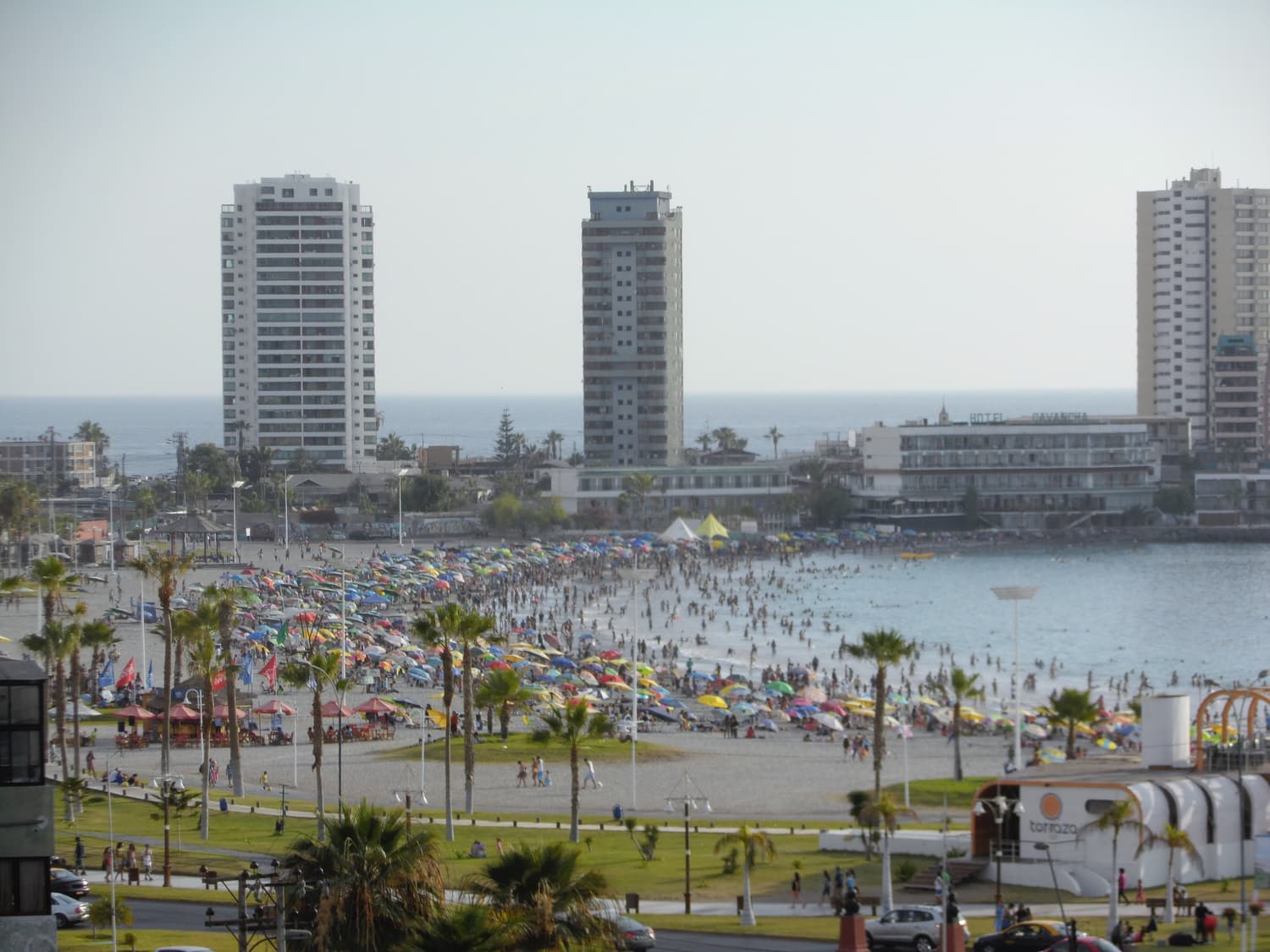
 Playa Cavancha
The city beach with a desert behind it
A long curve of sand in the middle of the city, sheltered by the Cavancha peninsula and backed by palms, a landscaped promenade and a wall of apartment towers. It is the calmest swimming beach in Iquique and the centre of local life from morning joggers to sunset.
 Iquique city & coast
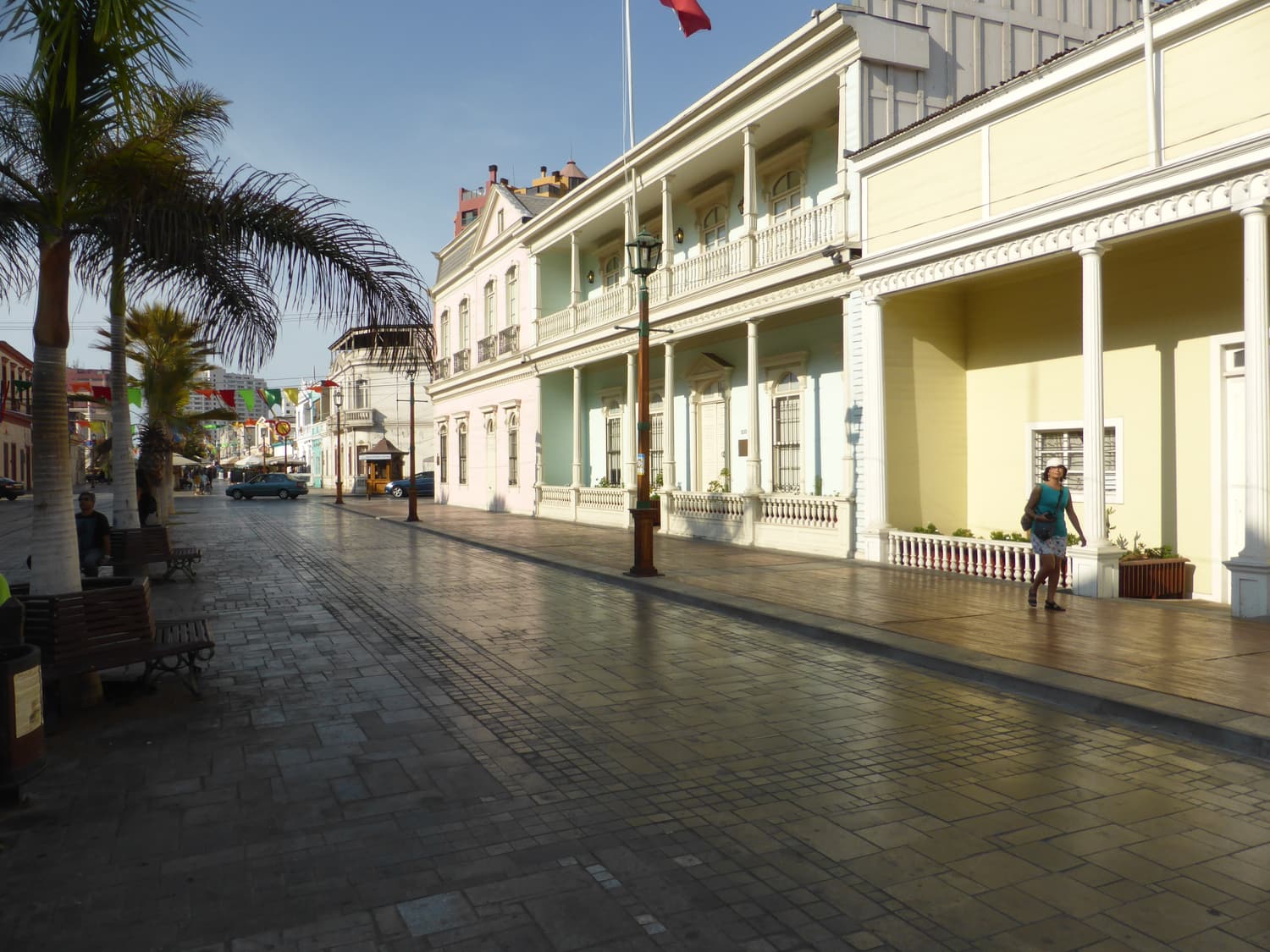
 Paseo Baquedano & Plaza Prat
A timber boulevard from the nitrate boom
Iquique’s historic core: a pedestrian street of balconied wooden mansions built with nitrate money between about 1880 and 1920, ending at a square with a white clock tower, a 19th-century theatre and a Moorish-style social club. It is a protected heritage zone and the best walk in the city.
 The pampa: saltpeter towns, oases & geoglyphs
 Humberstone & Santa Laura
UNESCO ghost towns of the saltpeter age
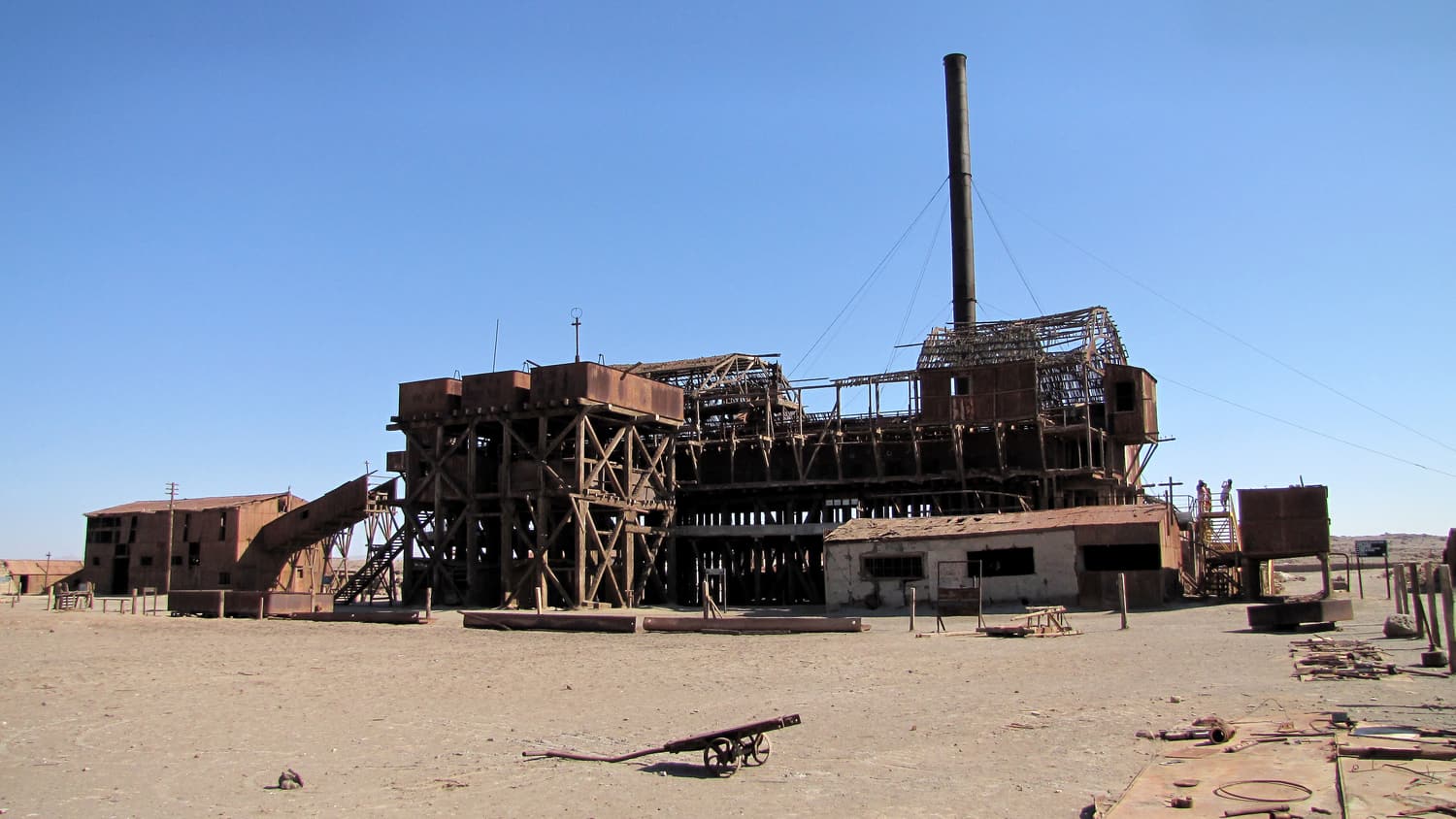
Two abandoned nitrate works in the desert 47 km east of Iquique, preserved by the dry air since they closed around 1960. Humberstone is a complete company town with a theatre, market and iron swimming pool; Santa Laura keeps its towering leaching plant. Together they are a UNESCO World Heritage Site.
 Iquique city & coast
 Cerro Dragón
A giant dune inside the city
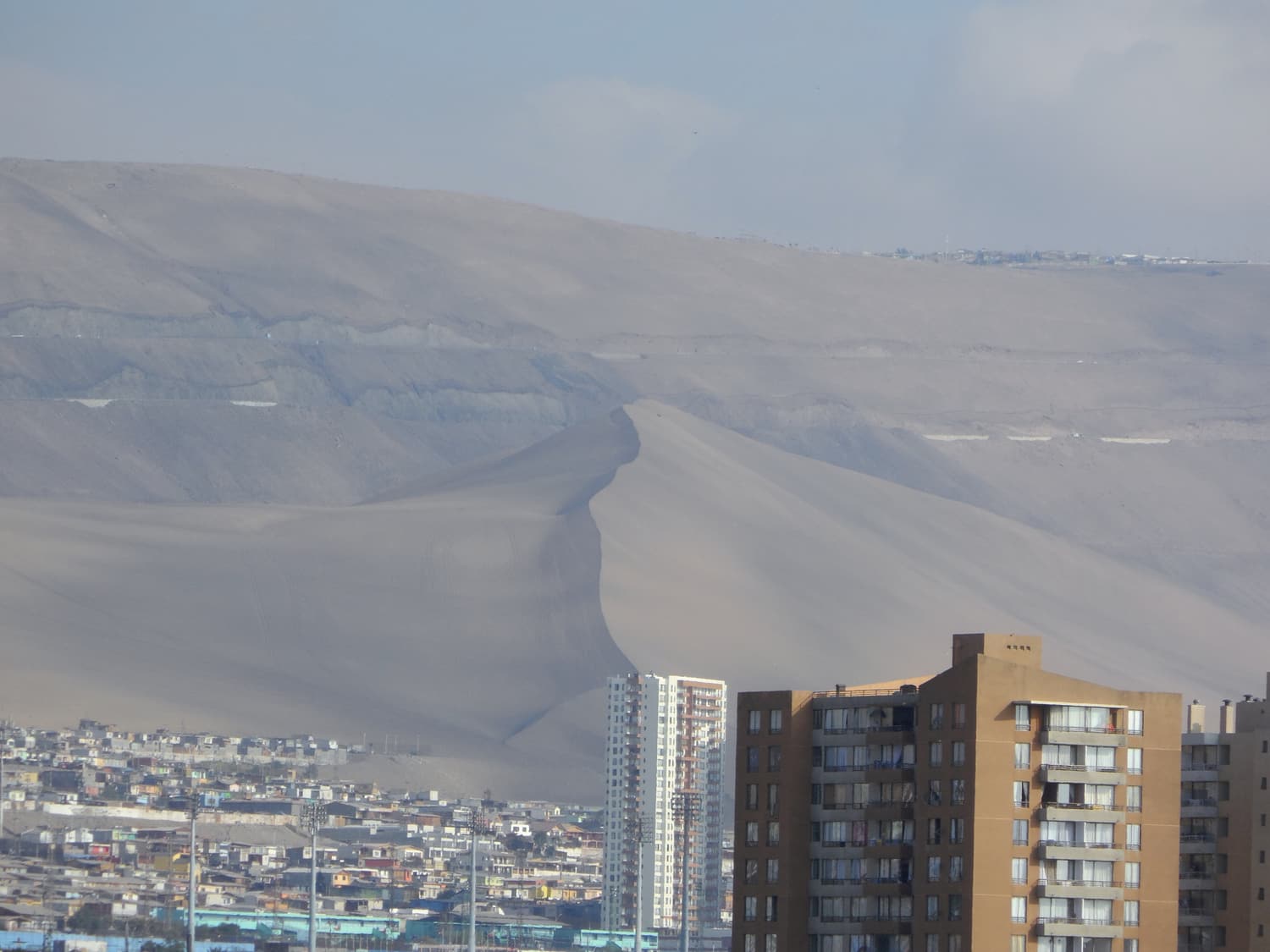
A ridge of sand about four kilometres long that rises between Iquique and the coastal cliff, protected as a nature sanctuary. Paragliders launched from Alto Hospicio drift over it almost every day of the year, and its slopes are where the city goes sandboarding.
The best things to do
- Fly: a tandem paragliding flight from Alto Hospicio over the dune to the beach.
- Walk the old town: Plaza Prat and Paseo Baquedano, then the harbour and its sea lions.
- Board the Esmeralda: the replica corvette and a boat to the buoy.
- Hit the sand: swim at Cavancha, surf the reef breaks, sandboard Cerro Dragón.
- Go up to the pampa: Humberstone, La Tirana, Pica and the geoglyphs.
Suggested itineraries
Two days
Day one: the historic centre in the morning, the Esmeralda museum and bay, then Cavancha for the afternoon and sunset. Day two: paragliding in the morning and a half-day trip to Humberstone and Santa Laura after lunch.
Four days
Add a full day for La Tirana and Pica with a swim in the Cocha Resbaladero, and a day for sandboarding, surfing or simply the beach.
A week
With a rental car, add the Atacama Giant and Pintados, then two days in the altiplano — the Salar del Huasco from Pica, or Isluga via Colchane — returning to the coast to recover.
ZOFRI: the duty-free zone
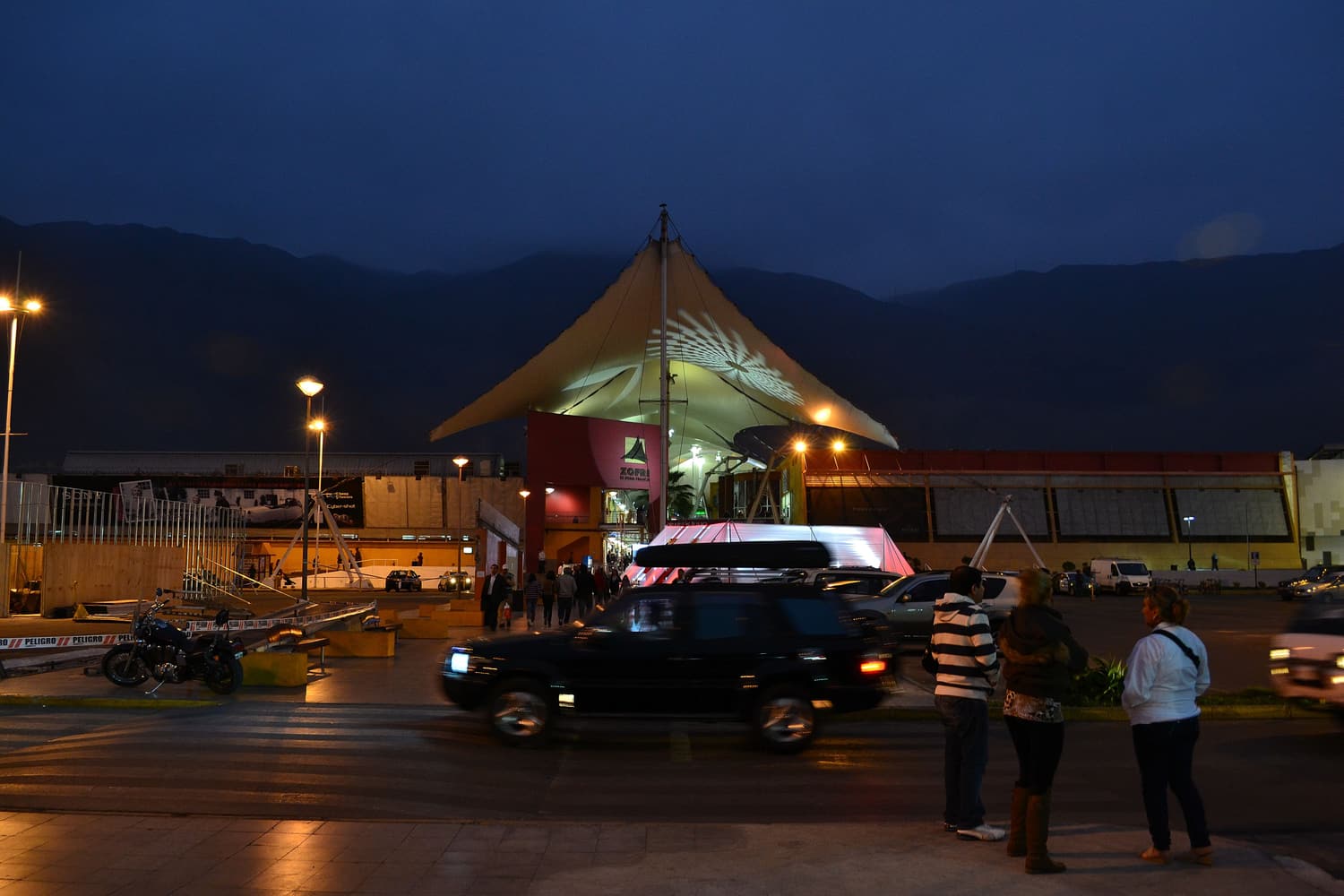
The Zona Franca de Iquique, at the north end of the city, is a vast walled trading estate created in 1975. The part visitors use is the shopping mall, with hundreds of small shops selling electronics, perfume, clothing, toys and spirits free of import duty and VAT. Prices can be good but are not always dramatically lower than elsewhere, so know what things cost at home. The mall generally opens Monday to Saturday — check current hours. Purchases above the traveller’s allowance may be taxed when you leave the region, which is what the customs checkpoints on the roads out are for. Take a taxi there and back, and keep an eye on your belongings.
Food and drink
Seafood is the thing: ceviche, grilled fish, machas a la parmesana (razor clams baked with cheese) and seafood empanadas. The city’s long-established Chinese community has given it plenty of Chinese-Chilean restaurants, and the altiplano contributes llama and alpaca meat and quinoa. Local specialities include the chumbeque, a layered sweet biscuit, and anything made with fruit from Pica — above all the mango sour and the pisco sour with limón de Pica.
Money and costs
The currency is the Chilean peso (CLP). ATMs are plentiful in Iquique and cards are widely accepted in hotels, restaurants and shops; carry cash for colectivos, markets, entrance fees and anything on the pampa. A 10% tip is customary in restaurants and is usually suggested on the bill.
Climate and what to pack
Expect mild, dry weather all year: warm, sunny summers and cooler winters with frequent morning cloud. Bring sun protection (hat, sunglasses, high-factor sunscreen), a light jacket for evenings and swimwear. For any trip above 3,000 m, pack proper warm layers, gloves and a hat — nights are below freezing. See when to visit for the detail.
Altitude on day trips
Iquique, Humberstone and Pica are low enough not to matter. Mamiña is at about 2,700 m; the Salar del Huasco, Colchane and Isluga are at 3,700–3,800 m, reached over higher passes. Going there from sea level in a morning commonly causes headache, breathlessness, nausea and poor sleep. Climb slowly, drink plenty of water, eat lightly, avoid alcohol and descend if symptoms get worse. Anyone with heart or lung disease, and anyone pregnant, should take medical advice first.
Earthquakes and tsunamis
Northern Chile is one of the most seismically active places in the world; a magnitude 8.2 earthquake struck off Iquique in April 2014. Buildings are designed for it and the city is well drilled. Along the coast you will see signs marking tsunami hazard zones, evacuation routes and safe assembly points. If you feel a strong or long earthquake near the shore, do not wait for a siren: walk inland and uphill along the marked route to the safe zone, and stay there until the authorities give the all-clear. Ask your hotel where its evacuation route goes.
Safety
Most visits are trouble-free, and the beachfront and Baquedano are busy and relaxed. Iquique is nonetheless a port and border-region city, and petty theft, bag-snatching and car break-ins do happen. Sensible precautions:
- Do not leave belongings unattended on the beach or anything visible in a parked car.
- Take care around the bus terminal, the central market and ZOFRI, and avoid poorly lit streets after dark.
- Use radio taxis, app-based rides or taxis ordered by your hotel at night.
- Keep your passport secure and carry a copy.
- Conditions change: check your own government’s current travel advice for Chile before you go.
The sea deserves respect too. Swim at Cavancha rather than the open beaches, where rip currents are strong.
Language and practicalities
Spanish is the language of daily life; English is limited outside hotels and tour companies. Electricity is 220 V with the two- or three-round-pin plugs used across Chile. Mobile coverage is good in the city and along the main highways, patchy to non-existent in the altiplano.