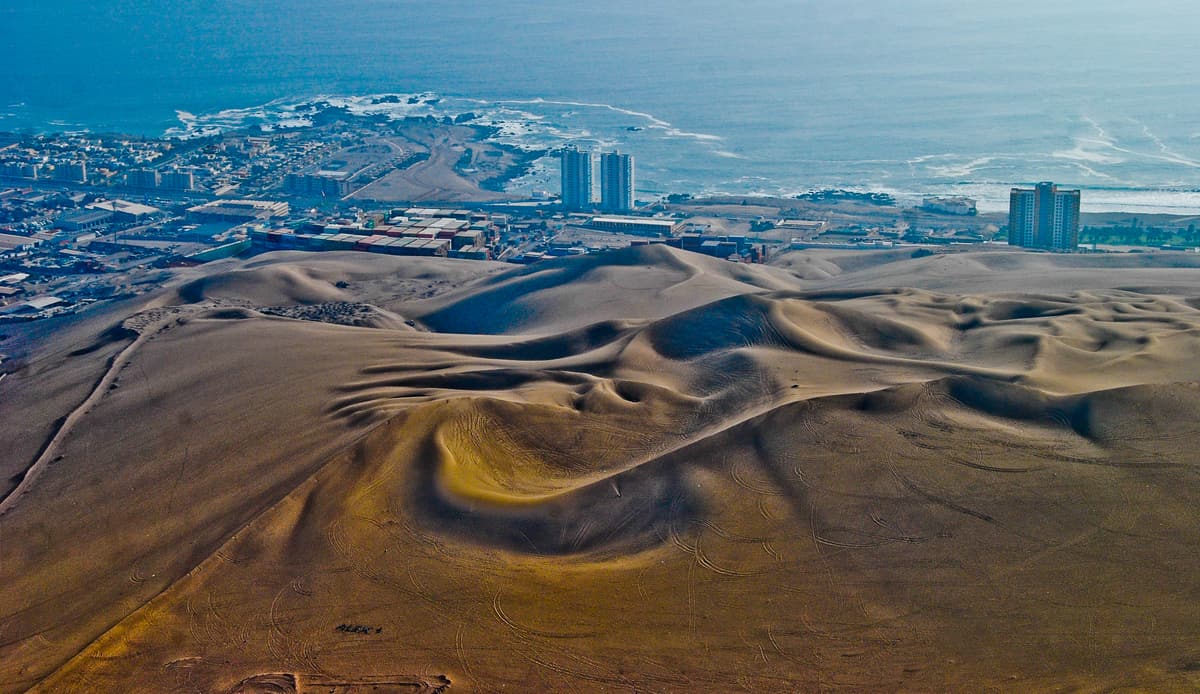
Iquique is about 1,800 km north of Santiago, and almost everyone arrives one of two ways: by air to Diego Aracena International Airport (IQQ), or by long-distance bus along the Pan-American Highway. Either way the last stretch is memorable — along a desert coast, or down the cliff road from Alto Hospicio with the city and the dune laid out below.
The options at a glance
| How | Journey time | Rough cost | Best for |
|---|---|---|---|
| Fly Santiago → IQQ + transfer | About 2 h 30 min + 40–45 min | Airfare + shared transfer or taxi | Most visitors |
| Bus from Arica | About 4.5–5 h | Low — check current fares | Travellers coming from Peru or Arica |
| Bus from Calama | About 6 h | Low to moderate | Coming from San Pedro de Atacama |
| Bus from Antofagasta | About 6–7 h | Low to moderate | Working north along the coast |
| Bus from Santiago | Roughly 24 h or more | Varies by seat class | Tight budgets, time to spare |
| Drive / rental car | 310 km from Arica, about 415 km from Antofagasta | Car hire + fuel | Freedom on the pampa |
1. Flying to Diego Aracena airport
LATAM, Sky and JetSMART fly between Santiago and Iquique several times a day in around two and a half hours, and there are usually direct or connecting flights from other Chilean cities. Schedules and any international routes change, so check current timetables.
The airport is on the coast road (Ruta 1), about 40 km south of the city — allow 40–45 minutes. Your options into town are:
- Shared transfer: minibuses that drop passengers at their hotels; buy at the counters in the arrivals hall.
- Taxi: official taxis wait outside; agree or confirm the fare before setting off.
- Rental car: the main companies have desks at the airport — the simplest way to start if you plan to explore the pampa.
2. Bus from Arica
Frequent buses cover the roughly 310 km between Arica and Iquique in about four and a half to five hours, crossing deep desert canyons on the way. Tarapacá is a duty-free zone, so buses stop at a customs checkpoint between the two cities, where luggage may be inspected — keep your passport handy.
3. From San Pedro de Atacama and Calama
There are buses between Calama and Iquique taking about six hours, some of them overnight. From San Pedro de Atacama, most travellers take a bus to Calama (about an hour and a half) and change there; a few direct services may run, so ask at the terminal. Expect another customs check on leaving the region.
Heading the other way? The best-reviewed San Pedro tours — Valle de la Luna, the El Tatio geysers and Piedras Rojas — are on our tours page.
4. From Antofagasta and Santiago
Buses run up the coast road and the Pan-American Highway from Antofagasta in around six to seven hours. From Santiago the journey takes roughly a full day and night; the more expensive cama and semi-cama seats recline enough to sleep. Most travellers fly at least one way.
5. Driving
The roads are good and almost empty, but distances between fuel stations are long: fill up whenever you can. From the Pan-American Highway, Ruta 16 descends to Iquique via Humberstone and Alto Hospicio; from the south, the coastal Ruta 1 runs along the foot of the cliffs past the airport. Carry water, and avoid night driving on the pampa if you can.
To and from Bolivia
Buses run from Iquique over the altiplano to the border at Colchane–Pisiga and on to Oruro and other Bolivian cities. It is a long, high and cold journey; check entry requirements for your nationality in advance.
Getting around once you are here
- In the city: colectivos (shared taxis on fixed routes) and buses run along the main avenues; ride-hailing apps and radio taxis are widely used.
- Humberstone and Pozo Almonte: frequent buses and colectivos, about 45 minutes to an hour.
- La Tirana and Pica: daily buses, about two hours to Pica.
- Geoglyphs and the altiplano: a rental car or an agency tour; there is no practical public transport.