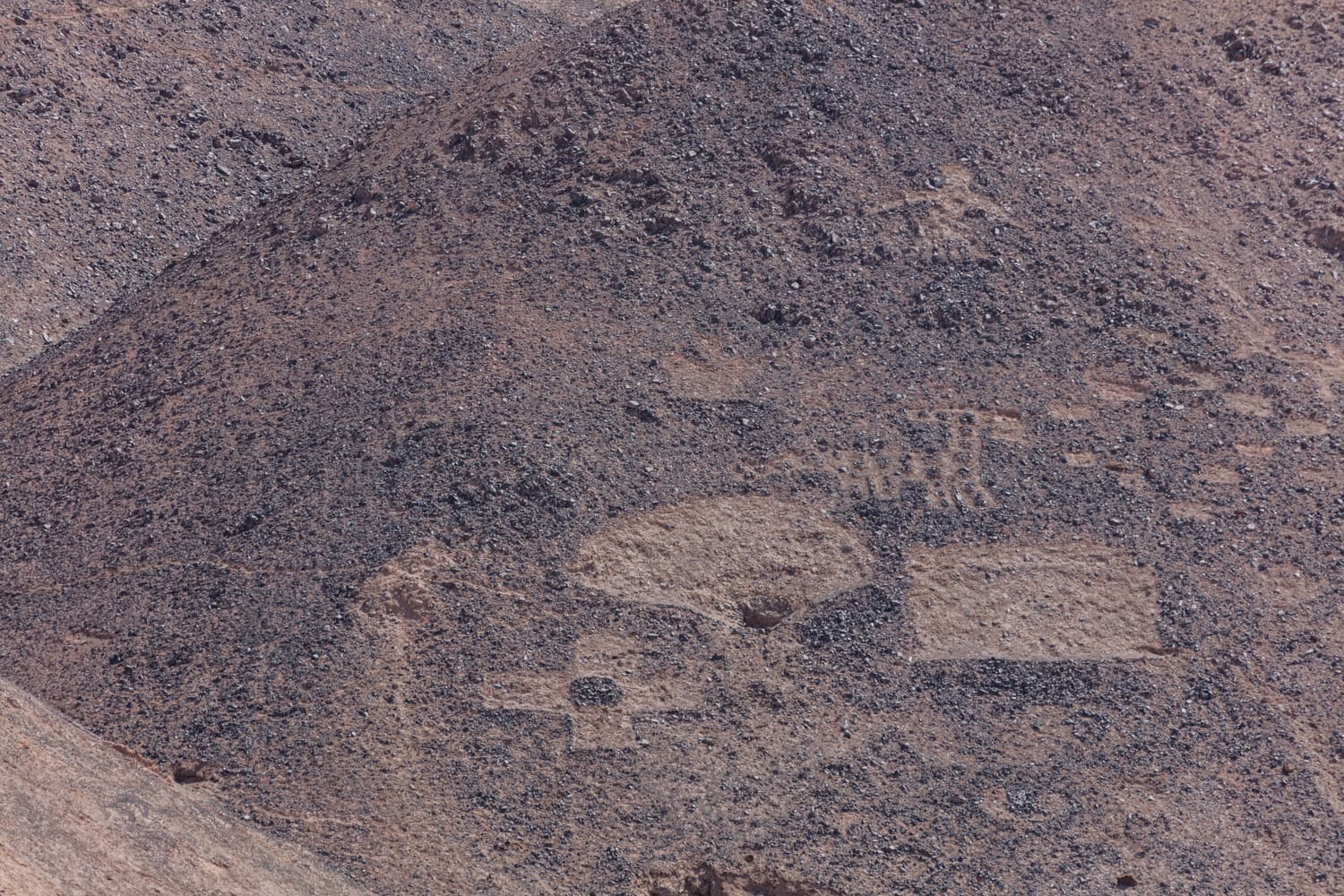
For more than a thousand years before the Spanish conquest, llama caravans crossed the Atacama between the Andes and the coast, and the people who travelled with them marked their routes with enormous drawings on the hillsides. The Tarapacá region is rich in these geoglyphs, made by scraping away the dark surface stones to expose the paler ground, or by piling stones into shapes.
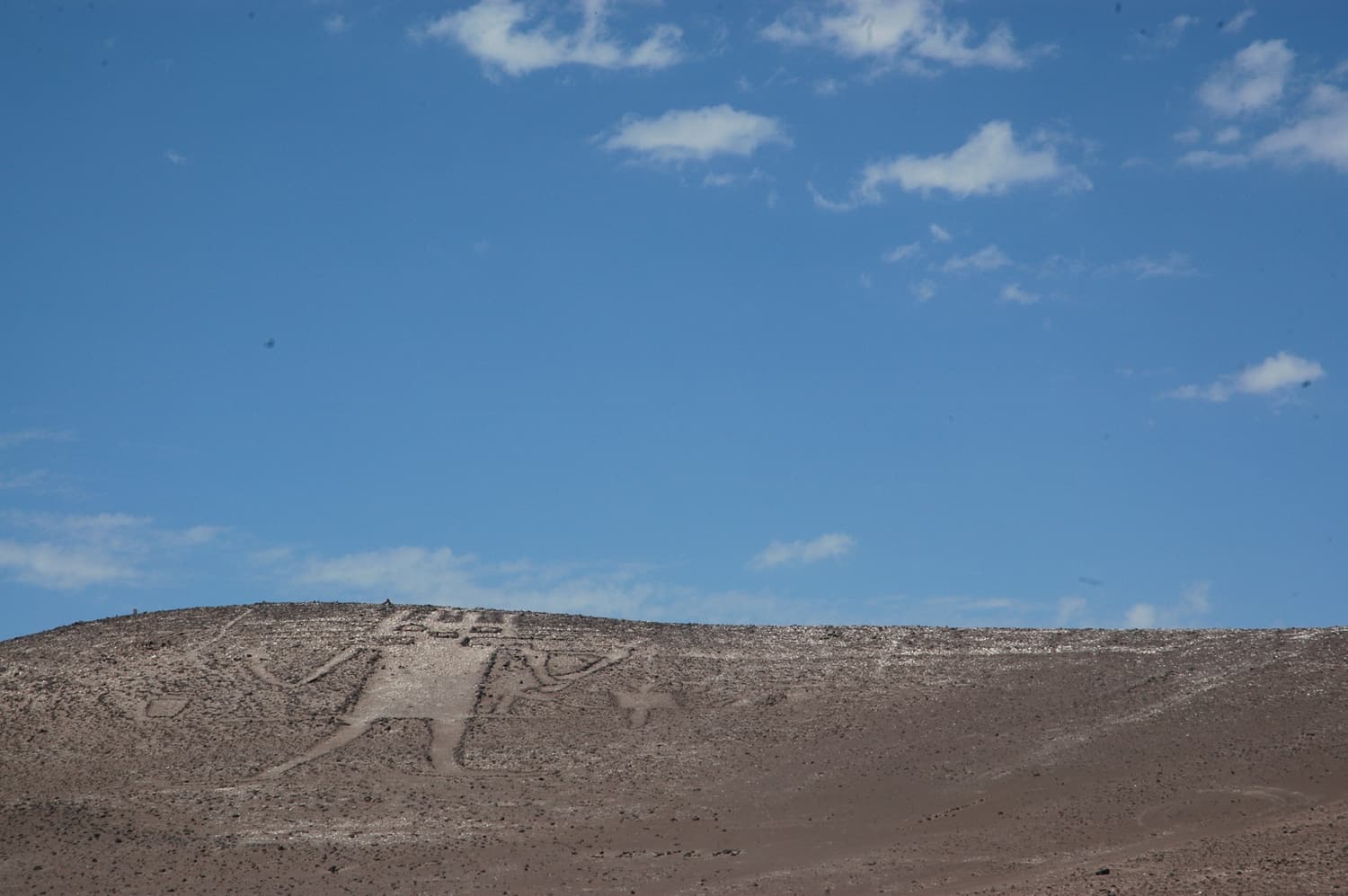
Two sites are outstanding. The Atacama Giant (Gigante de Atacama, also called the Gigante de Tarapacá) on the isolated hill of Cerro Unita is one of the largest prehistoric representations of a human figure anywhere. Pintados, in the Pampa del Tamarugal National Reserve, is the densest concentration: more than 400 figures spread along several kilometres of slopes.
Top things to do at Atacama Giant & Pintados
Stand before the Atacama Giant
The figure, roughly 100 m from head to foot (published measurements range from about 86 m to nearly 120 m), has a square head with rays, long arms and stick legs, and is usually interpreted as a deity or shaman. It is generally dated to between about AD 1000 and 1400. Other figures and lines cover the same hill. View it from a distance on the western side — that is where it reads best — and never walk on the slope.
Walk the trail at Pintados
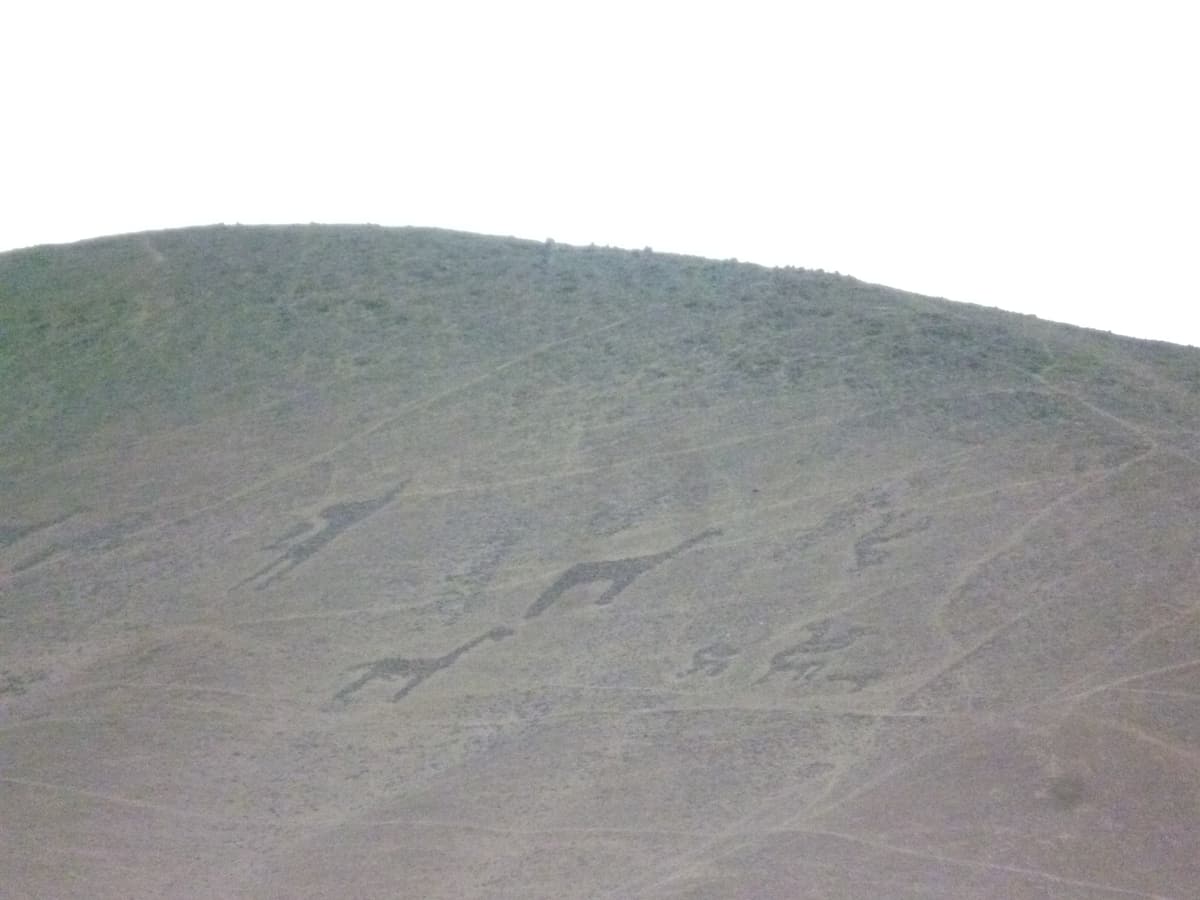
At Cerros Pintados a path runs along the foot of the hills below panels of human figures, llamas, birds, fish, circles, arrows and chequerboard designs, thought to have been made between roughly AD 500 and 1450. The site is managed by Chile’s forestry and parks agency, CONAF; there is an entrance fee and a small visitor area.
See the tamarugo forest
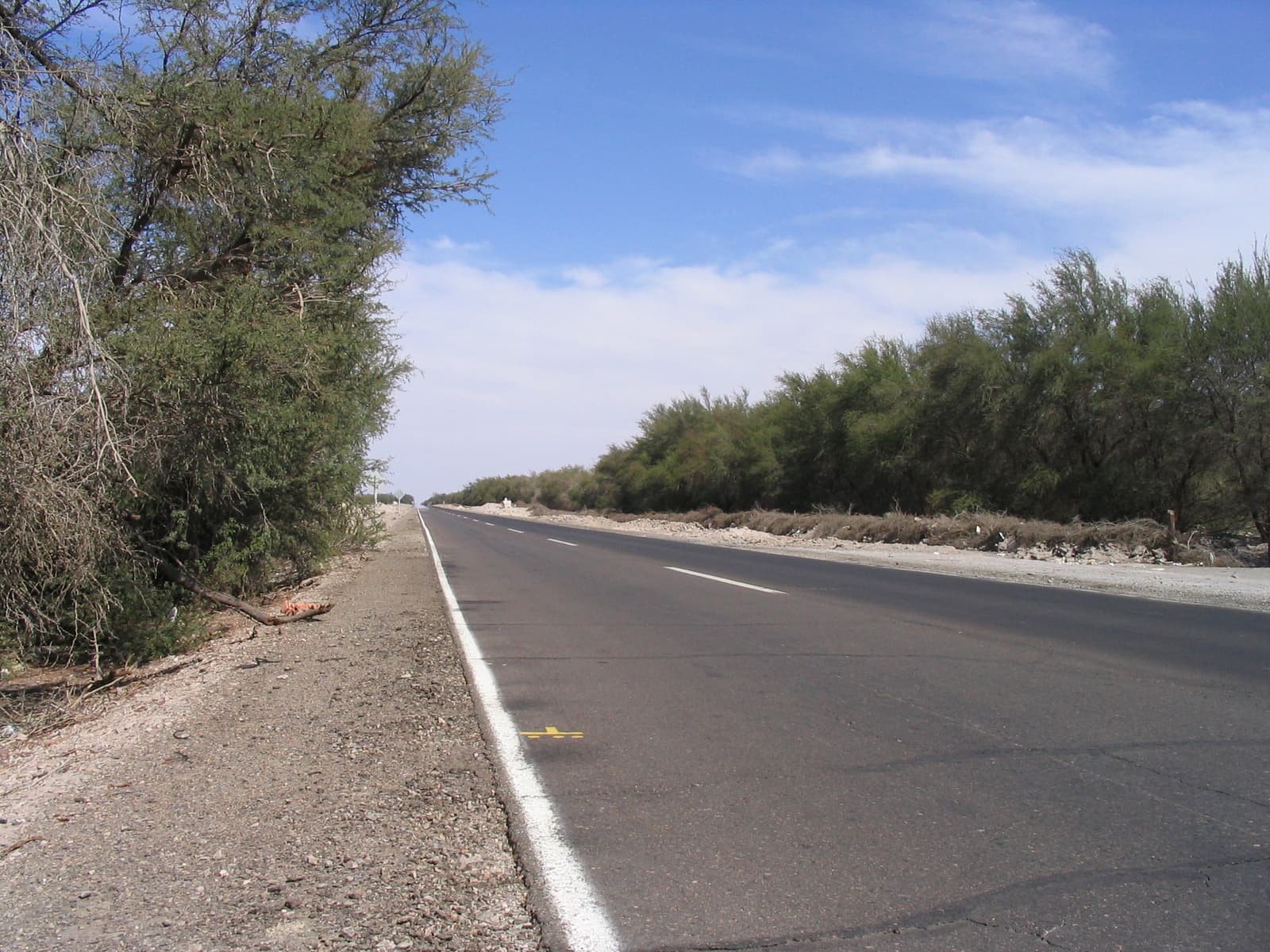
The reserve around Pintados protects groves of tamarugo, a tough native tree that survives on groundwater in a desert with almost no rain. The Pan-American Highway runs through the plantations south of Pozo Almonte.
How to get to Atacama Giant & Pintados
- Atacama Giant: drive to Huara on the Pan-American Highway (about 75 km from Iquique), then east about 14 km on Ruta 15, the road to Colchane; a short track leads to Cerro Unita. No public transport goes to the hill.
- Pintados: about 95 km from Iquique; the signed turn-off is on the Pan-American Highway south of Pozo Almonte, followed by a few kilometres of unpaved road.
- Tours: some Iquique agencies include one site or the other in pampa circuits. Neither is on GetYourGuide at present; the nearest bookable geoglyph trip is the Azapa valley tour from Arica.
Insider tips
- Low sun gives the best contrast. Aim for early morning or late afternoon; at midday the figures look flat.
- There is no shade, water or phone signal to rely on at Cerro Unita. Carry water and start with a full tank.
- Walking or driving on the figures destroys them. Stay on marked paths and tracks.
- Check Pintados’ opening days and hours with CONAF before making the detour.
Bookable experiences to pair with Atacama Giant & Pintados
GetYourGuide’s Iquique catalogue is small, so these are the real, bookable experiences that fit best around a visit to Atacama Giant & Pintados:
 Small-group trip from US$79
 From Arica: Azapa & Lluta Valleys Archaeology Trip
A half-day small-group trip from Arica into the two green valleys behind the city, with hillside geoglyphs that belong to the same desert tradition as the Atacama Giant and Pintados near Iquique. A new listing without reviews yet.
- Ancient geoglyphs on the valley sides
- The historic church of Poconchile
- Birdlife at the Lluta river wetland
 City tour + boat from US$85
 Iquique: Guided City Tour with Boat Trip to Esmeralda Buoy
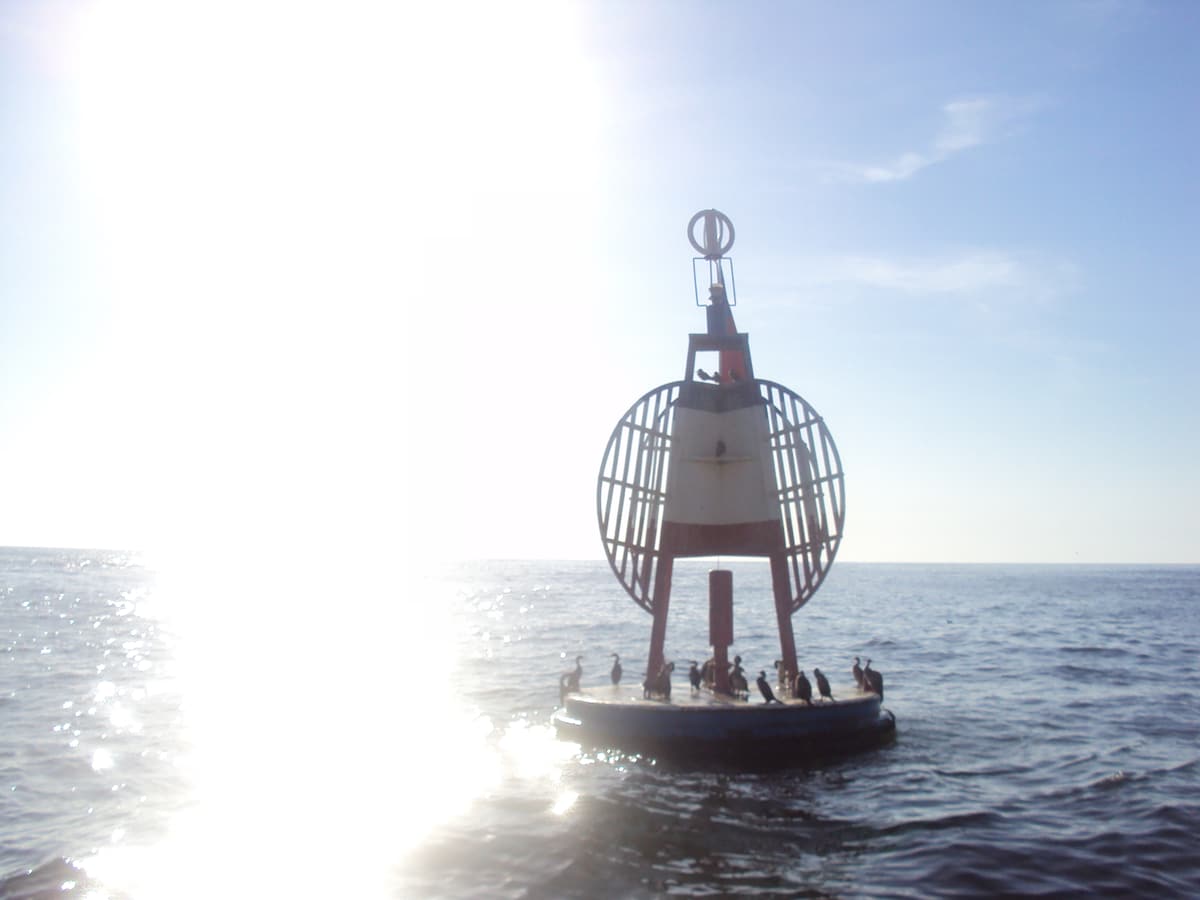
A half-day introduction to the city with a guide: the nitrate-era square with its clock tower and theatre, then out by boat to the buoy that marks where the corvette Esmeralda sank on 21 May 1879. The most efficient way to understand why this date matters so much in Chile.
- Plaza Prat, the 1877 Clock Tower and the Municipal Theatre
- Boat trip across the bay to the Esmeralda buoy
- The story of the Battle of Iquique where it happened